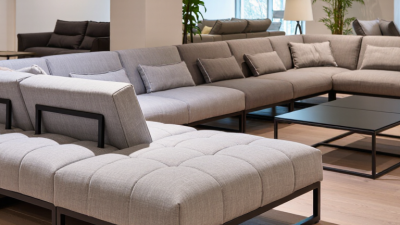
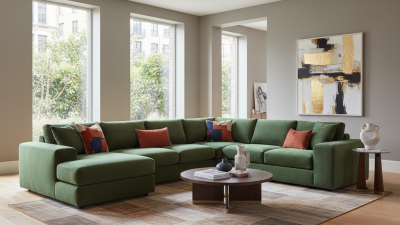
Finding the best Modular Sofa manufacturers in China requires more than comparing factory prices. A reliable search begins with product evidence, not attractive photographs or polished websites. Experienced buyers inspect frame construction, foam density, fabric performance, connector strength, and stitching quality. They also request material samples before approving any production order.
Dieter Rams, a respected industrial and furniture designer, said, “Good design is as little design as possible.” That principle matters here. A well-designed Modular Sofa should reconfigure smoothly, remain stable, and feel comfortable in every arrangement. Examine how each module locks together. Ask whether replacement covers and spare connectors are available. Small details often reveal a manufacturer’s real capability.
Factory verification adds another layer of confidence. Review production videos, quality-control procedures, export experience, testing records, and customer references. Check whether the supplier can maintain consistent dimensions across several batches. Confirm lead times, minimum order quantities, packaging standards, and after-sales responsibility in writing. A low quote may hide weaker foam, thin upholstery, or expensive replacement parts.
No checklist is perfect. That is the uncomfortable truth. A factory may pass an audit and still miss a color shade during mass production. Therefore, approve a pre-production sample and inspect random units before shipment. The strongest Chinese manufacturers communicate clearly, document changes, and admit limitations early. This guide explains how to compare them carefully, avoid rushed decisions, and select a Modular Sofa partner suited to your market, budget, and long-term quality expectations.
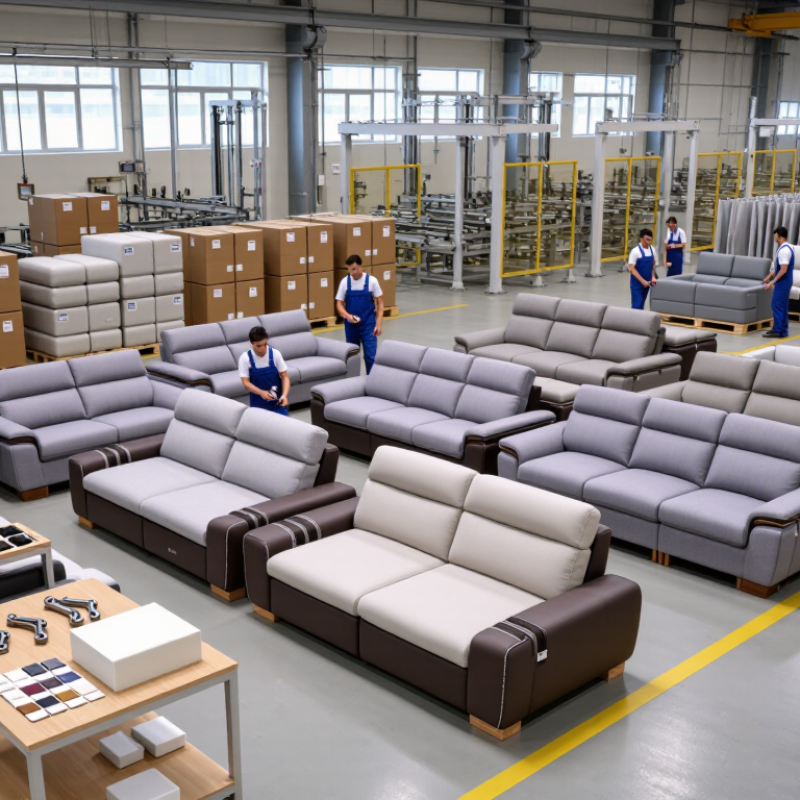
Before contacting modular sofa manufacturers in China, define the product you actually need. Decide where the sofa will be used, such as a family room, hotel lobby, or office lounge. Measure the available space carefully, including doorways, elevators, and wall clearance. Record the preferred sofa length, seat depth, back height, and number of modules.
Small details matter. For example, a 70-centimeter seat depth may feel comfortable in a living room but occupy too much space in a narrow reception area. Choose the frame material, foam firmness, upholstery type, leg finish, and connection method. Clarify whether you need removable covers, storage modules, or reconfigurable sections.
Your purchasing goal should guide every factory discussion. A hotel project may prioritize stain resistance, consistent replacement parts, and stable delivery schedules. A retailer may need attractive packaging, flexible minimum order quantities, and several fabric options. If you are buying for personal use, comfort and easy maintenance may matter more than production volume. Ask manufacturers for samples, material specifications, drawings, and quality-control procedures. Set a realistic target price, order quantity, and delivery window.
Do not judge quality from photographs alone. I once accepted an attractive sample without checking its internal support, and the finished batch felt noticeably softer. That mistake was avoidable. Request a production sample, inspect stitching and joints, and confirm carton dimensions before placing an order. Keep every requirement in one written document. Leave room for revision.
| Requirement Dimension | Recommended Specification or Benchmark | Purchasing Goal | Why It Matters | How to Verify a Manufacturer |
|---|---|---|---|---|
| Target Market | Residential, hospitality, rental, or commercial use; define the primary sales region before sampling. | Match product design, compliance documents, packaging, and durability to the intended market. | Safety requirements, consumer preferences, and logistics costs differ by market. | Request previous export experience by market category and review market-specific test reports. |
| Sofa Configuration | Use 2–6 interchangeable modules, such as armless seats, corner units, ottomans, and chaise sections. | Create multiple layouts without redesigning the entire product range. | A broader module system improves flexibility for different room sizes and future replacements. | Check connection strength, alignment tolerance, spare-module availability, and layout drawings. |
| Overall Dimensions | Typical seat width: 700–950 mm; seat depth: 850–1,100 mm; seat height: 380–480 mm. | Fit the intended room layouts while maintaining comfortable seating proportions. | Dimensions influence comfort, container utilization, installation, and customer returns. | Approve dimensioned technical drawings and inspect a pre-production sample. |
| Frame Construction | Kiln-dried hardwood, engineered wood, or a documented combination with reinforced joints. | Achieve stable frame performance and consistent production quality. | Moisture variation, weak joints, and unsuitable materials can cause squeaking or deformation. | Request material specifications, moisture-control procedures, joint details, and factory inspection records. |
| Cushion Fill | Seat foam commonly specified at approximately 30–40 kg/m³, with layered foam or fiber wrap where required. | Balance comfort, shape retention, product weight, and cost. | Foam density and structure strongly affect long-term seating comfort and recovery. | Confirm foam density, hardness range, rebound performance, and compression test results. |
| Upholstery Material | Choose fabric, polyester blend, linen-look fabric, leather, or synthetic leather according to use and price position. | Meet the desired appearance, cleaning expectations, and target retail price. | Abrasion resistance, colorfastness, pilling, and cleanability affect customer satisfaction. | Request composition, abrasion rating, pilling grade, colorfastness data, and stain-cleaning instructions. |
| Modular Connectors | Use corrosion-resistant metal or reinforced hardware with easy tool-free or low-tool assembly. | Prevent module separation during use and simplify customer installation. | Poor connectors can create movement, uneven gaps, and installation complaints. | Perform repeated connection tests and verify replacement hardware availability. |
| Durability Requirement | Set a test target suitable for the application; commercial use normally requires more stringent testing than occasional residential use. | Reduce structural failures, fabric wear, and warranty claims. | Usage frequency and user weight vary significantly between residential and commercial settings. | Request applicable seating, frame, fabric, and load test reports from an independent laboratory. |
| Safety and Compliance | Specify applicable flammability, chemical, labeling, and packaging requirements for the destination market. | Clear customs and sell legally in the target region. | Requirements vary by country and may apply to upholstery, foam, wood, and packaging. | Check current certificates, laboratory scope, test dates, product descriptions, and factory audit records. |
| Customization Level | Define accepted options for dimensions, colors, fabrics, leg styles, module combinations, and packaging. | Obtain market differentiation without creating excessive tooling or inventory costs. | Every additional variation can affect minimum order quantity, lead time, and quality control. | Request a written customization matrix, sample approval process, tooling charges, and color-control method. |
| Minimum Order Quantity | Establish a practical opening order, often based on one production batch or a mixed-module quantity. | Limit initial inventory risk while achieving a workable factory price. | MOQ may apply separately to colors, fabrics, configurations, or complete sets. | Obtain a written MOQ schedule and confirm whether mixed colors and modules are allowed. |
| Sample Development | Allow approximately 15–30 days for a standard sample and longer for new tooling or complex customization. | Validate comfort, appearance, dimensions, packaging, and assembly before bulk production. | Sampling identifies design or manufacturing problems before they affect a large order. | Use an approved sample, signed specification sheet, and documented revision-control process. |
| Production Lead Time | A standard order commonly requires about 30–60 days after material confirmation; custom projects may require more. | Coordinate inventory replenishment, promotions, and seasonal demand. | Fabric availability, foam production, inspection, and packaging can affect the schedule. | Request a milestone schedule covering material booking, production, inspection, and loading. |
| Packaging and Shipping | Consider knock-down packaging, vacuum packing where suitable, corner protection, moisture barriers, and carton drop protection. | Reduce freight volume, transit damage, and final-mile handling costs. | Large upholstered products are sensitive to compression, moisture, impact, and carton deformation. | Review packing drawings, carton dimensions, loading photos, drop-test results, and container utilization. |
| Target Cost Structure | Compare product cost, sampling, tooling, packaging, inspection, inland transport, freight, duties, and after-sales reserves. | Evaluate total landed cost rather than factory price alone. | A low unit price can be offset by high freight, damage, defects, or replacement-part costs. | Request an itemized quotation with trade terms, validity period, payment schedule, and exclusions. |
| Quality Control Plan | Use approved specifications, incoming-material checks, in-process inspections, final inspection, and defect classification. | Keep quality consistent across modules, colors, and production batches. | Modular products require consistent dimensions and appearance so units work together. | Request an inspection checklist, sample quality standard, corrective-action procedure, and inspection access. |
| Warranty and Spare Parts | Define warranty coverage, claim evidence, response time, replacement modules, covers, connectors, and legs. | Protect customer satisfaction and reduce the cost of resolving after-sales issues. | Replaceable parts can extend product life and avoid shipping an entire sofa for a minor defect. | Obtain written warranty terms, spare-part pricing, response procedures, and service-level commitments. |
| Supplier Evaluation Score | Score product quality, engineering, compliance, communication, delivery, cost, and after-sales support on a 1–5 scale. | Select a supplier based on overall purchasing fit rather than price alone. | A weighted score makes trade-offs visible and supports objective supplier comparison. | Use the same scorecard for every shortlisted manufacturer and retain supporting evidence for each score. |